Barclays statements are probably the best looking of any UK bank. Clean layout, good typography, proper spacing. They look like someone actually designed them.

They also include a clear summary at the top:
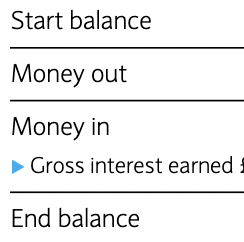
Start balance. Money out. Money in. End balance. Even gross interest earned. Everything you need at a glance.
But looks can be deceiving. Under the hood, Barclays statements have some quirks that make them surprisingly tricky to parse.
The Date Problem
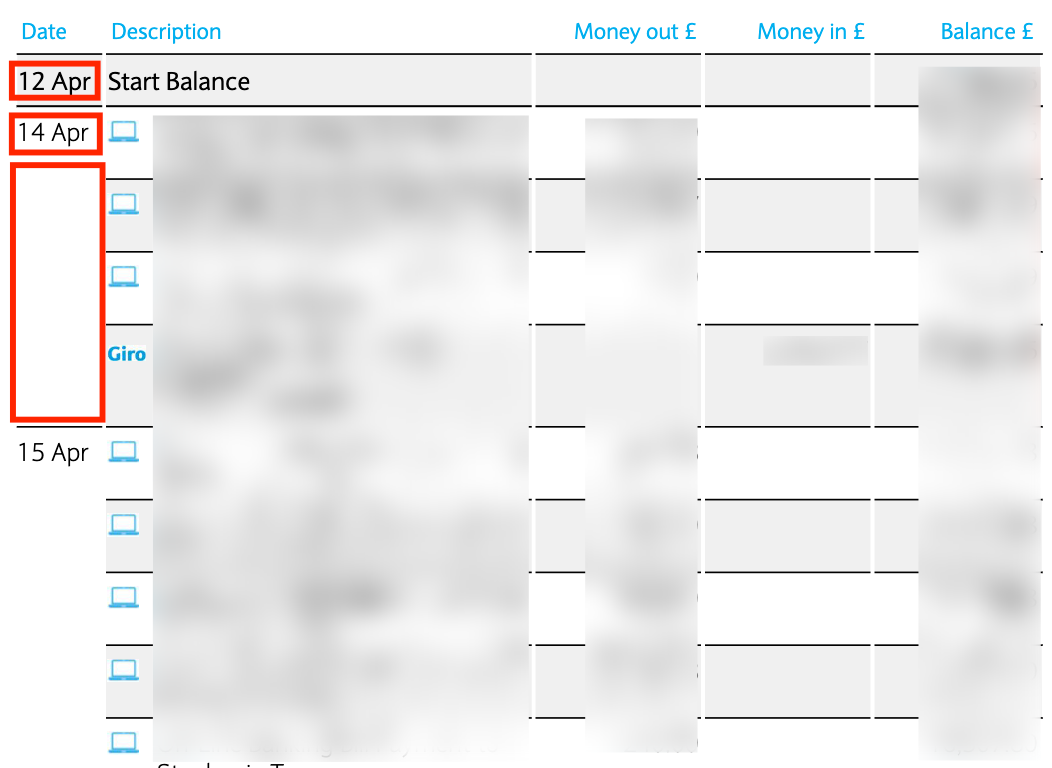
Look at those dates: "12 Apr", "14 Apr", "15 Apr". Notice anything missing? The year. Barclays dates don't include the year. Your brain fills in the gap, but a parser sees "12 Apr" and has to figure out whether that's 2024, 2025, or something else entirely.
And it gets worse. Not every transaction row even has a date. See how "12 Apr" appears once, then several transactions follow with blank date fields? Barclays only shows the date on the first transaction of each day. Five payments on the 14th? Only the first one shows "14 Apr". The other four have empty date cells.
For a human reading the statement, this makes sense - less visual clutter. For a parser, you need to extract the year from the statement header and carry dates forward until you hit a new one. Miss either of these, and you'll end up with dates that don't parse or transactions with no date at all.
The Start Balance Problem
Page one of a Barclays statement begins with something like this:

"Start Balance" in the description column, a balance figure on the right, but no money in or money out. It's not a transaction - it's just telling you where the account stood at the beginning of the period.
What do you do with this when exporting to Excel? Include it and confuse anyone who's trying to sum up the transactions. Exclude it and risk losing context. There's no perfect answer, but you need to handle it deliberately rather than just dumping everything into rows.
Balance Brought Forward
Similar issue on page two and beyond:

"Balance brought forward from previous page." Again, no date, no transaction amounts - just a running balance carried over from the previous page.
These balance-forward rows appear at the top of every page after the first. They're useful for someone reading the PDF page by page, but they're not transactions. A naive parser will include them as rows in your spreadsheet, which is almost certainly not what you want.
Good Design, Hidden Complexity
The irony is that Barclays statements are so well designed for human reading that they're harder for machines to process. The missing years, the date grouping, the balance rows - these are all design decisions that make the PDF easier to scan visually.
But they create edge cases that trip up generic PDF extraction tools. You need Barclays-specific logic to handle them properly.
Got a Barclays Statement?
We handle the quirks so you don't have to. First conversion free.
Convert a Statement